

From Catwoman to Supermom
Julie Newmar, best known for her iconic portrayal of Catwoman in the 1960s Batman series, was the epitome of glamour, elegance, and allure on the screen. She played a character who was sleek, untouchable, and dangerous, making her one of the most memorable villains in television history. However, behind the silver screen, Julie’s life story took a much more profound and powerful turn—one that would ultimately redefine what it means to be strong, compassionate, and resilient.
Julie’s life journey as a mother, especially after giving birth to her son, John, at 48 years old, tells a tale of extraordinary love and sacrifice. In many ways, Julie’s story transcends the glitz and glamour of Hollywood, revealing a woman who faced the unimaginable with unwavering determination and grace. Her path to motherhood was not easy; it was fraught with hardships, medical challenges, and societal expectations. Yet, Julie’s love for her son was never deterred. She rose above the many obstacles life threw her way, choosing to define her own legacy as a mother who defied the odds.
The Struggles Begin: From Joy to Despair
Julie Newmar’s journey into motherhood was not the fairy tale she might have imagined. After enduring three devastating miscarriages, Julie was told that her body might never carry a child to term. The medical community had little faith that she would ever be able to become a mother. But Julie’s heart and will were stronger than the medical diagnoses. She found the strength to try again, and in 1966, Julie gave birth to a son, John.
The joy of John’s birth was soon followed by the crushing reality of his diagnosis. Almost immediately, the doctors began running tests. John was diagnosed with Down syndrome, and the news was not easy to accept. The world, at the time, often whispered about the limitations of people with disabilities, especially those with Down syndrome. But Julie’s unwavering love for her son never wavered. She refused to accept the limitations others placed on him, believing instead in his potential.
As if life wasn’t already testing her limits, when John was three years old, he contracted meningitis, which nearly claimed his life. But against the odds, he survived. However, the meningitis took away John’s hearing, leaving him profoundly deaf. Then, at four years old, John lost his ability to speak. Within the span of just one year, Julie’s son had gone from a healthy child to someone who was profoundly deaf, mute, and entirely dependent on her for communication.
A Mother’s Dedication: Silent Love
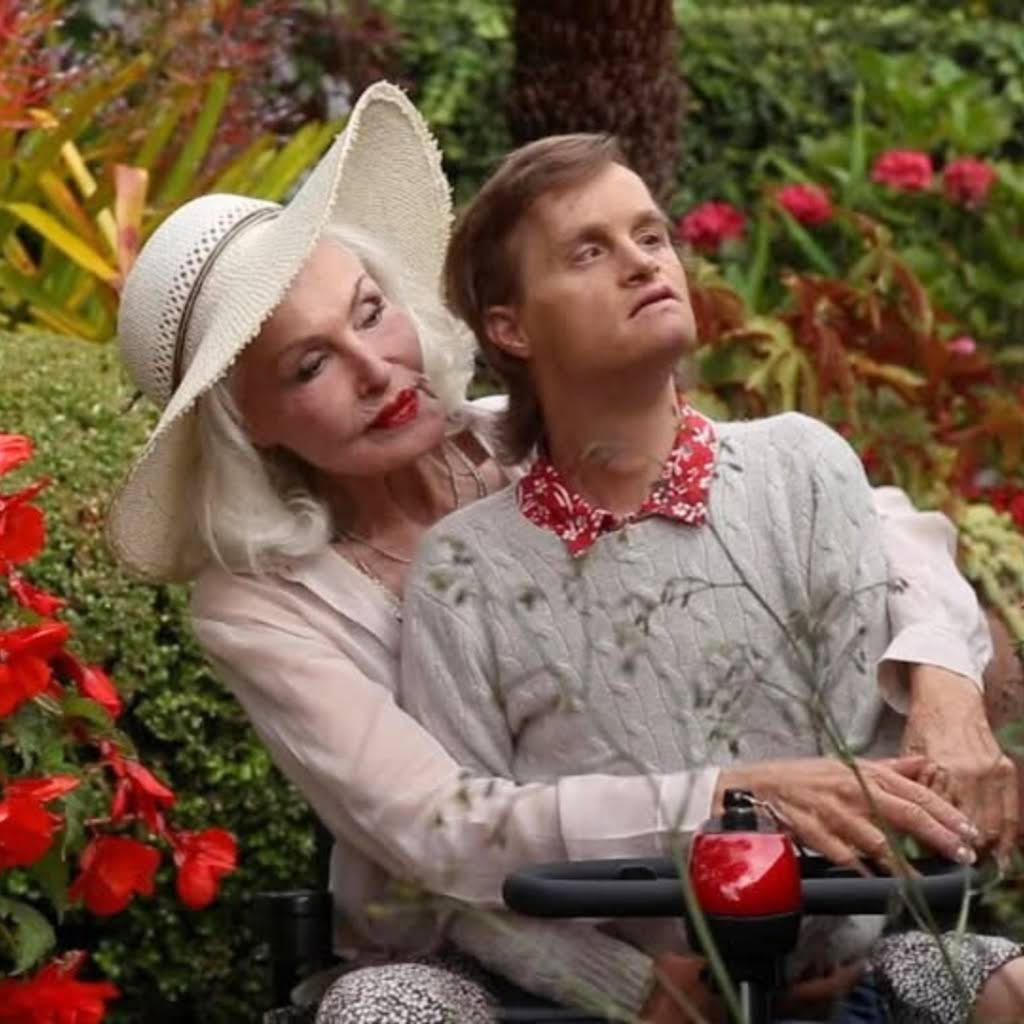
In the face of these hardships, Julie’s love for John grew deeper. Her marriage, already strained, ended in 1984, leaving Julie a single mother in her fifties, raising a son with profound disabilities. At a time when the world’s understanding of disabilities was limited, Julie was raising her son alone, teaching him how to navigate a world that was not designed for him.
Julie’s life became one of silence, as she communicated with John using sign language. She learned it not because it was a choice but because it was the only way she could connect with her son. The world may have defined John by his disabilities, but Julie saw a beautiful soul in him, full of potential and capable of far more than others imagined. Julie never called her son a burden. Instead, she called him a teacher. A teacher of unconditional love, patience, and resilience.
Julie’s day-to-day life with John was a routine of deep devotion. She fed him every meal by hand, every single day. She never let the silence that surrounded him feel like a tragedy. Instead, she built a world around his needs, learning from him as much as she taught him. In her eyes, John was never someone who lacked; he was someone who saw the world in a completely unique way, a perspective that Julie embraced fully.
A New Kind of Heroism: Julie’s Unseen Journey
Julie’s life became a quiet story of heroism—one not defined by media coverage or public accolades but by the profound love and care she showed her son. She was not living for the spotlight; she was living for John. She became his advocate, his voice, and his greatest support.
While Julie continued to support John, she also faced her own health challenges. As she reached her sixties, Julie was diagnosed with Charcot-Marie-Tooth disease, a progressive condition that slowly stole her ability to walk. At the same time, John developed scoliosis, a curvature of the spine that would soon affect his ability to move as well. Their travels together slowed down. The grand adventures they once shared—visiting places like Bali, Thailand, and Southeast Asia—became memories of the past. However, these challenges didn’t take away the love and devotion that filled Julie’s every action.
Julie, ever the resilient mother, transformed their world once again. She created a sanctuary in her own backyard—a beautiful garden of 8,600 square feet filled with roses. For Julie and John, this garden became their private refuge, a space where they could find peace and beauty despite the struggles they faced. The roses bloomed in silence, much like the love Julie had for John—a love that continued to grow stronger with each passing day.

John’s Art: A Voice Beyond Silence
Though John could not hear the world, he found a way to express himself through art. Julie had always believed that John’s world was far from limited. His silence was not a handicap; it was an invitation to explore other forms of communication. And John did just that. He started painting, using his own unique perspective to create vibrant works of art. His art was displayed in galleries, proving to the world that someone with disabilities could create beauty that others would appreciate.
Julie, never one to hold her son back, encouraged him every step of the way. She became his greatest cheerleader, standing beside him as he transformed his silence into something the world could see and admire. Through his art, John found a voice that was not bound by sound, a voice that communicated the depth of his soul and the beauty of his perspective. Julie’s love for him had allowed him to express himself in ways that others never expected, and the world embraced him for it.
A Love That Endures: Growing Together
As the years passed, Julie and John faced more challenges together. Julie’s health continued to decline, and John’s physical condition worsened. But no matter what they faced, they faced it together. Julie built a life around John’s needs, always finding new ways to connect with him and show him love.
The love between Julie and John is a testament to the power of unconditional love—a love that doesn’t fade with time or difficulties. Their bond is one that transcends words, transcends illness, and transcends the challenges of the world around them. It is a love that has endured through every obstacle, every hardship, and every change.
In interviews, Julie has often spoken about the ways in which John has changed her life. She has said that he is the cause of her great expansion of perspective, that he is the reason she practices unconditional love. She has called him a blessing and a jewel, and she has never once wavered in her belief that her life with him is the greatest adventure she could have ever imagined.
Julie’s Legacy: A Mother’s Enduring Love
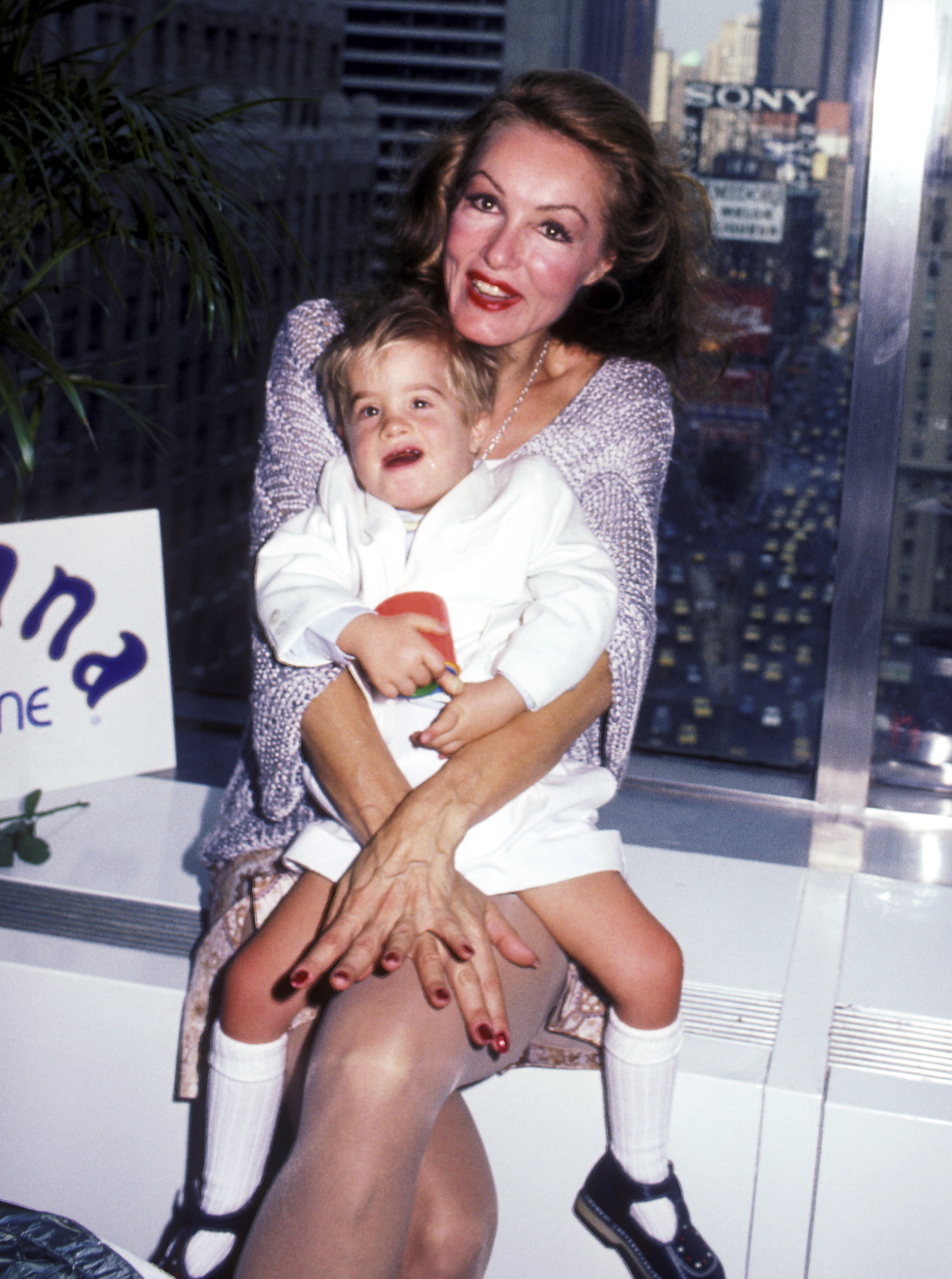
Julie Newmar may have portrayed a memorable villain on screen, but her most profound role has been far from Hollywood. For more than forty years, she has devoted herself to being a mother—one defined not by ease, but by unwavering commitment, resilience, and deep compassion.
She is a mother who refused to accept limits placed on her son by others. A mother who found ways to connect and communicate in a world that often felt silent. A mother who, day after day, shows up with patience, strength, and a kind of care that few truly understand.
Her legacy won’t be measured by fame or the characters she brought to life on television. Instead, it lives in the steadfast love she has given her son—the quiet courage to stand beside him, to believe in him, and to face life with grace and unconditional devotion.
Julie’s story reminds us that the most meaningful legacies aren’t built on recognition or applause. They are built on love—the kind that endures, that gives without hesitation, and that remains long after everything else fades.



0 Commentaires